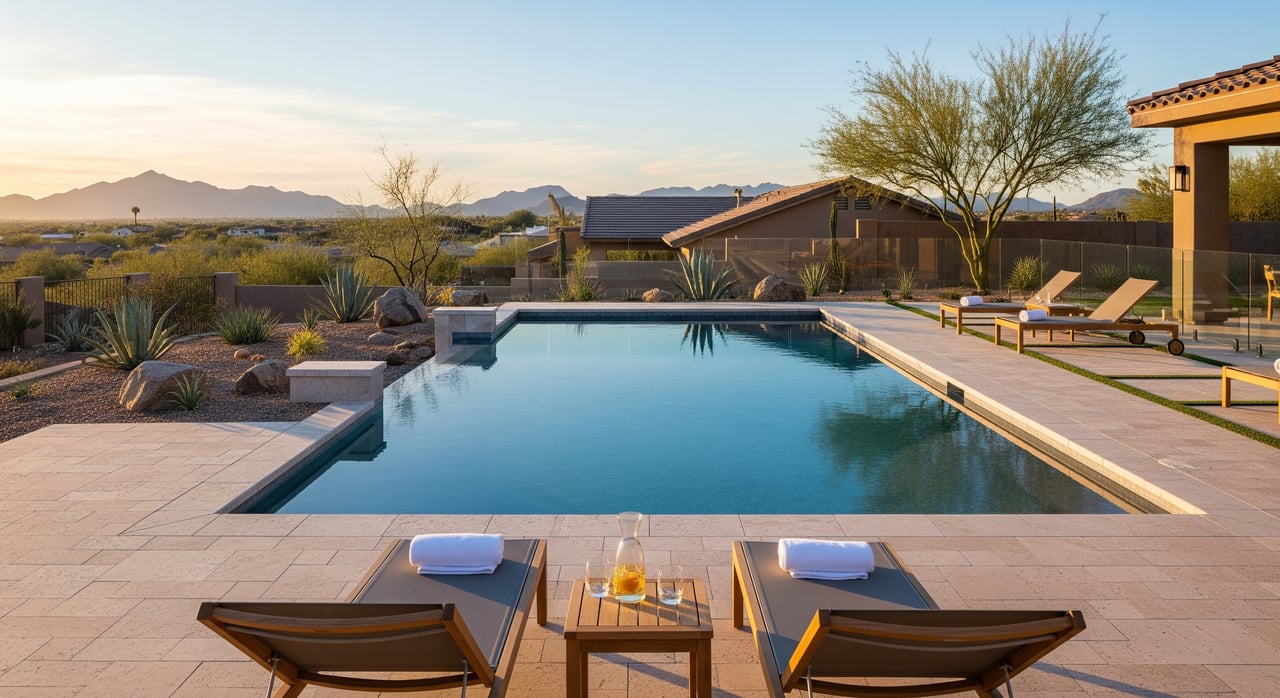
Is your pool ready to impress when the Mesa sun is blazing? In summer, a sparkling, safe pool can be the hero of your listing, but heat and UV can turn small issues into deal breakers fast. You want water that looks crystal clear, equipment that runs smoothly, and staging that helps buyers picture their life at home. This guide shows you exactly how to prep your pool for Mesa showings, from safety and city rules to water care and staging that pops in photos. Let’s dive in.
Why Mesa heat changes pool prep
Mesa’s intense sun and triple-digit highs speed up chlorine loss, increase evaporation, and make surfaces hot during showings. The result is more frequent testing, top-offs, and filtration to keep water clear and inviting. The CDC recommends keeping free chlorine near 1–4 ppm and pH between 7.0 and 7.8, and to test more often during heavy use or extreme heat. You will also want to plan photos and showings when glare is low, like morning or late afternoon, to help the pool photograph beautifully and feel more comfortable for visitors. For chemistry targets and testing guidance, review the CDC’s healthy swimming guidance at the CDC’s home pool page.
- Reference: CDC water treatment and testing guidance: home pool and hot tub water treatment and testing
- Photo timing tips: real estate photography tips for better listings
Safety, barriers, and seller disclosure
Arizona law sets clear pool barrier standards and requires a safety notice be provided when selling a home with a qualifying pool. Generally, residential pools must have a barrier at least 5 feet high with self-closing, self-latching gates and specific latch-height rules. Read the statute for full requirements and to understand the seller’s notice obligation.
- Arizona statute: ARS §36-1681 pool enclosure and notice
The City of Mesa treats stagnant pools and faulty pool fencing as enforcement priorities. If your barrier needs repair or replacement, address it before you list. Keep records of any fixes and make sure gates work as designed.
- Mesa enforcement priorities: Code Compliance priorities
Water chemistry that stays photo-ready
Hot weather increases chlorine demand. Stay ahead of it so your pool looks clear and smells clean, not harsh.
Test and balance: Target free chlorine near 1–4 ppm and pH 7.0–7.8. Test more often in high heat or if you have frequent showings. Adjust before buyers arrive.
Shock smart: If you shock the pool to clear contaminants, follow product directions and do not allow swimming until levels return to safe ranges. Typical wait times are at least 8 to 24 hours depending on the product and dosage. Always verify free chlorine and pH before calling the pool swimmable.
Re-entry timing basics: how long to wait after shocking
Daily and pre-showing routine
- Test free chlorine and pH. Adjust to target ranges.
- Top off the waterline if evaporation shows. Keep skimmers covered.
- Skim, brush, and vacuum. Empty skimmer baskets.
- Clean or backwash filters as recommended by the manufacturer.
- Run the pump long enough to circulate and distribute chemicals.
- Do a quick visual scan for cloudiness, debris, or algae. Correct early.
Filtration, pump run time, and algae control
In Mesa’s heat, longer filtration helps. Many owners run pumps 8 to 12 hours per day in summer. Variable-speed pumps can run longer at lower speeds to improve circulation at a lower energy cost. Longer, consistent run times help chemical distribution and reduce algae risk.
- Pump runtime guidance: how long to keep your pump running
Mesa logistics for water and draining
Do not drain or backwash into Mesa storm drains or gutters. The city discourages it due to chemical pollution risks, and it may violate code. Follow city guidance for proper disposal, such as routing to the sanitary sewer where allowed or hiring a contractor. Mesa has also used voluntary water-watch actions in the past, so confirm current recommendations before any large water use like a drain and refill.
- City guidance: Drain and backwash rules for pools
If you install or repair a pool barrier, Mesa may require permits and inspections. Check requirements in advance and keep receipts or inspection records handy for buyers.
- Inspections and permits: Mesa construction inspections
Staging and photography that sell
Stage your pool area like an outdoor living space. Clean, simple, and safe is the winning combo. Professional staging has been shown to reduce time on market and boost appeal.
- Staging impact: NAR report on home staging
Practical staging tips for Mesa heat:
- Clear blue water is non-negotiable. Skim, vacuum, clean filters, and retest chemistry.
- Put away chemicals, hoses, and toys. Keep storage locked and tidy.
- Refresh cushions and umbrellas. Add 2 to 3 chairs and a small table for a calm, resort-style vibe.
- Turn on water features and pool lighting for showings and twilight photos.
- Keep gates latched between tours. A simple, respectful sign like “Pool area — supervised access only” can help set expectations.
Buyer questions you can answer upfront
Buyers in Mesa are drawn to a pool that looks easy to own. Reduce uncertainty with simple documents and facts.
Provide recent service invoices, the pump and filter make and age, heater details, and any warranty or automation notes.
Share a basic maintenance summary, including summer pump runtime and how often you test and treat the water.
Note seller compliance with Arizona’s pool barrier rules and that gates self-close and self-latch.
Typical routine service in the Phoenix metro runs about 80 to 150 dollars per month, with electricity, water top-offs, and repairs on top. Share actual costs from your records when possible.
Local cost reference: pool maintenance cost guide
Quick checklist for show day
- Test and balance water. Confirm chlorine and pH are in range.
- Run the pump to circulate. Empty skimmer baskets.
- Skim the surface and spot vacuum.
- Top off the waterline if needed.
- Put away chemicals, toys, vac hoses, and tools.
- Clean deck and furniture. Set simple, neutral seating.
- Turn on water features and lighting for scheduled photos or twilight showings.
- Verify barriers and gates latch and lock properly.
- Prohibit swimming during showings. If you shocked recently, wait for safe levels before anyone enters.
Ready to sell your Mesa home with confidence? If you want a calm, step-by-step plan for listing prep, market timing, and showings, reach out to The McIvor Team. We will help you present your pool at its best and guide you through every decision.
FAQs
How does Mesa heat affect pool chemistry during showings?
- High UV and heat speed up chlorine loss and algae growth, so test more often and keep free chlorine near 1–4 ppm with pH 7.0–7.8.
What Arizona pool barrier rules apply when selling a home?
- Arizona requires a compliant barrier with self-closing, self-latching gates for qualifying pools, and sellers must provide a safety notice to buyers.
Can I drain or backwash my pool into the street in Mesa?
- No. Mesa discourages discharge to storm drains and gutters; follow city guidance for proper disposal and confirm any current water-use recommendations.
How long after shocking is it safe to swim before or after a showing?
- Typically 8 to 24 hours depending on the product and dose; confirm free chlorine and pH are in safe ranges before anyone enters.
What does pool care usually cost in the Phoenix–Mesa area?
- Routine service often runs about 80 to 150 dollars per month, plus electricity, water top-offs, and periodic repairs.
How long should I run my pool pump in summer?
- Many owners run 8 to 12 hours per day in hot weather, and variable-speed pumps help you run longer at lower cost.