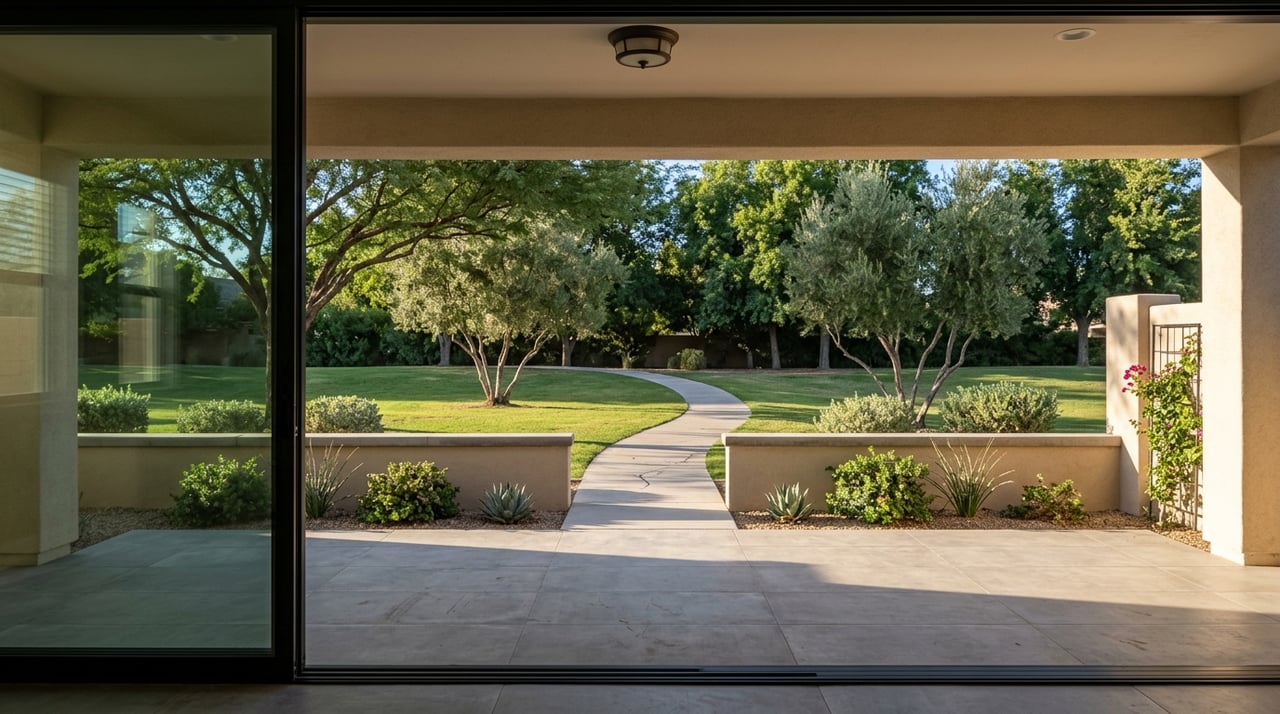
Wondering what makes Litchfield Park feel so different from other West Valley communities? For many buyers, it comes down to a rare mix of golf views, shaded pathways, neighborhood parks, and a compact village setting that feels both established and easy to enjoy. If you are considering a move here, this guide will help you understand what daily life looks like, what kinds of homes you will find, and why this small city continues to stand out. Let’s dive in.
Why Litchfield Park Stands Out
Litchfield Park is a small planned residential community in Maricopa County with a distinct identity shaped by mature landscaping, palm and orange trees, pathways, and sidewalk cafés. According to the City of Litchfield Park Visitor Guide, the city sits about 16 miles west of central Phoenix and has an estimated population of 6,863 within just 3.28 square miles.
That compact footprint matters. Instead of feeling spread out, Litchfield Park is often experienced as a connected, village-style community where neighborhoods, parks, golf, and local gathering spots are close together. If you are looking for a place with a more intimate scale, this is a big part of the appeal.
The housing profile also points to a stable, owner-oriented market. The U.S. Census reports an 84.8% owner-occupied housing rate, along with a median value of owner-occupied homes of $577,000 and a median household income of $126,250.
Golf Shapes Daily Life
Golf is not just an amenity here. It is part of the city’s layout and character. The city’s general plan explains that livability in Litchfield Park depends on golf courses, parks, green belts, pathways, entry features, and landscaping, with The Wigwam’s fairways directly adjoining residential neighborhoods.
That planning approach gives many parts of the city a more open, green appearance than you might expect in the desert. Fairways, landscaped corridors, and connected paths help create visual breathing room throughout the community. For buyers, that often translates into a calm, established feel that is hard to replicate in newer, more spread-out suburbs.
The Wigwam Is a Major Anchor
When people think of Litchfield Park, they often think of The Wigwam. The resort has been part of the city’s story since it opened to the public in 1929, and it remains one of the area’s defining lifestyle features.
According to the official Wigwam site, the property spans 440 manicured acres and includes three golf courses with 54 holes of championship play. Beyond golf, it also offers pools, tennis, a spa, and dining, which adds to the city’s resort-adjacent atmosphere.
For homebuyers, this does not just mean access to golf. It means living in a community where open space, landscaping, and long-established amenities are built into the local identity.
Greenbelts, Parks, and Pathways
If your ideal neighborhood includes space to walk, relax outdoors, or enjoy a park close to home, Litchfield Park gives you several options in a small area. The city says it maintains 11 public parks, which is a notable amount for a community of this size.
Kiwanis Park includes a walking trail, benches, and a cactus garden. Scout Park offers a large grassy open space and playgrounds. Other neighborhood parks help support the city’s active outdoor routine, and parks generally operate from 6 a.m. to 10 p.m.
This park system supports one of the biggest lifestyle advantages in Litchfield Park: you do not have to drive far to enjoy outdoor space. Whether you want a short morning walk, a playground stop, or a scenic route through landscaped areas, the city’s design makes that easier.
A Walkable Village Feel
Litchfield Park’s public life is centered more on neighborhood-scale gathering places than on large entertainment districts. The city’s history materials describe a village-oriented setting, which helps explain why the area often feels more pedestrian-friendly and personal than many larger suburban areas.
That village charm comes from a combination of factors: mature trees, pathways, smaller retail pockets, local events, and a street pattern that feels connected rather than sprawling. If you value a community where daily errands and leisure feel a little more relaxed, this setting may be a strong fit.
Shops, Dining, and Local Convenience
Even though Litchfield Park is compact, it still offers useful retail and dining nodes. The city highlights places such as Litchfield Park Commons, Tierra Verde Downtown Center, and the Wigwam Creek Center, which is anchored by Albertsons.
The city also describes Litchfield Square as a 26-acre mixed-use downtown hub intended to include offices, restaurants, and retail. Together, these areas support the local pattern of convenience without changing the city’s smaller-scale feel.
For residents, that often means you can stay close to home for many day-to-day needs. You still have access to the broader West Valley and Phoenix area, but your immediate surroundings tend to feel neighborhood-focused rather than heavily commercial.
Events Add to the Village Charm
Litchfield Park is not just about attractive streets and golf views. It also has a strong community calendar that helps bring people together throughout the year. The city says it sponsors 15 special events, including outdoor concerts, art festivals, runs, cultural events, and holiday celebrations.
Recurring examples mentioned by the city include the Halloween Carnival, weekend concerts on the Wigwam lawn, Christmas in the Park, the Arts Festival, and fireworks displays. These events reinforce the city’s small-town character and give residents regular ways to connect with the community.
If you are comparing West Valley areas, this is one of the reasons Litchfield Park often feels more established and community-centered. The lifestyle here is shaped not only by homes and amenities, but also by shared local traditions.
What Homes You Will Find
One of the strengths of Litchfield Park is that it offers more housing variety than some buyers expect. According to the city’s planning documents, the residential mix includes townhouses, patio homes, garden apartments, single-family detached homes, condos, rental options, and estate-sized lots.
That range can be helpful whether you want a lower-maintenance property, a traditional single-family home, or something with a more custom feel. It also means buyers can find different home styles within the same city, rather than having to compromise on location to match their goals.
Notable Neighborhood Areas
The Village at Litchfield Park is one of the most recognized neighborhood names in the city. The general plan says it completes the residential ring around The Wigwam Resort and Spa’s West golf course and includes its own parks and paths. The city’s development map also shows that Village at Litchfield Park Phase 2 is a partially developed residential subdivision with builders currently active there.
Another important area is Cachet at the Wigwam. City materials describe it as a 167-unit gated residential project with single-family homes and condominiums for sale.
Litchfield Greens I is also noted in city planning materials as a private community with custom homes and pathway access to shopping, churches, and public recreation areas. These examples show that Litchfield Park includes both established residential pockets and newer planned options.
Who Litchfield Park Appeals To
Litchfield Park can work well for several types of buyers because of its combination of housing choice, outdoor amenities, and community scale. If you want a neighborhood that feels established and owner-oriented, the city’s housing profile may be especially appealing.
It can also be attractive if you are relocating and want a place with a clear identity that is easy to understand from a distance. The city’s small size, defined boundaries, and concentrated amenities make it easier to get a feel for daily life than in larger, more fragmented markets.
For sellers, Litchfield Park’s strong sense of place can be a real advantage. Features like golf adjacency, pathways, mature landscaping, parks, and local events help create a story around the lifestyle, not just the house itself.
What to Keep in Mind as You Search
As you explore Litchfield Park, it helps to look beyond square footage and price alone. Think about how close you want to be to parks, pathways, retail nodes, or golf-oriented areas. In a compact city, small location differences can shape your daily routine in meaningful ways.
It is also important to stay geographically accurate. City materials note that some nearby developments, such as Wigwam Creek, are adjacent to Litchfield Park but are not within the city limits. If you want the specific village setting and amenities that define Litchfield Park, make sure your home search is focused on the correct boundaries.
Whether you are buying your first home, relocating from out of state, or planning a move within the West Valley, local guidance can make the search much easier. If you want help understanding Litchfield Park’s neighborhoods, home options, and market opportunities, connect with The McIvor Team for patient, local support every step of the way.
FAQs
What makes Litchfield Park different from other West Valley suburbs?
- Litchfield Park stands out for its compact size, village-style layout, golf courses, greenbelts, pathways, mature landscaping, and neighborhood-scale gathering places.
What types of homes are common in Litchfield Park?
- City planning documents describe a mix of single-family homes, townhomes, patio homes, condos, garden apartments, rental options, and some custom-home communities.
Is golf a major part of life in Litchfield Park?
- Yes. The city’s planning documents identify golf courses and open space as central to local livability, and The Wigwam is a major resort and golf anchor with 54 holes across three courses.
Are there parks and walking areas in Litchfield Park?
- Yes. The city maintains 11 public parks, and several include walking trails, benches, playgrounds, grassy areas, and landscaped outdoor space.
Is there enough to do locally in Litchfield Park?
- Yes. Residents have access to golf, parks, local retail and dining areas, and a city event calendar that includes concerts, art festivals, holiday celebrations, and community gatherings.