Thinking about buying a single-family rental in Buckeye? You’re not alone. With steady population growth, new master-planned communities, and strong commuter access to Phoenix job hubs, Buckeye sits on many investors’ shortlists. In this guide, you’ll get a clear picture of prices, rents, yields, operational risks like water and HOAs, and a simple framework to run your numbers with confidence. Let’s dive in.
Why Buckeye appeals to SFR investors
Buckeye is part of the West Valley growth corridor and has expanded rapidly in recent years, with population estimates in the low-to-mid 100,000s according to the latest Census Reporter profile. Growth has been anchored by large master-planned communities and logistics-driven employment nearby. Developments like Verrado’s nationally ranked master plan continue to add housing, retail, and recreation that attract long-term residents.
On the rent side, averages vary by source and bedroom mix. As of February 2026, RentCafe’s market update shows average rent in Buckeye around $1,785, with 3-bedroom units averaging $2,023. In the broader metro, a heavy multifamily delivery cycle increased apartment vacancies in 2023–2024, which can influence rent growth and concessions for all rentals. Recent Yardi-based commentary puts Phoenix apartment vacancy around the mid-single digits, reflecting that supply pressure (Metro Phoenix market update).
What you can buy and for how much
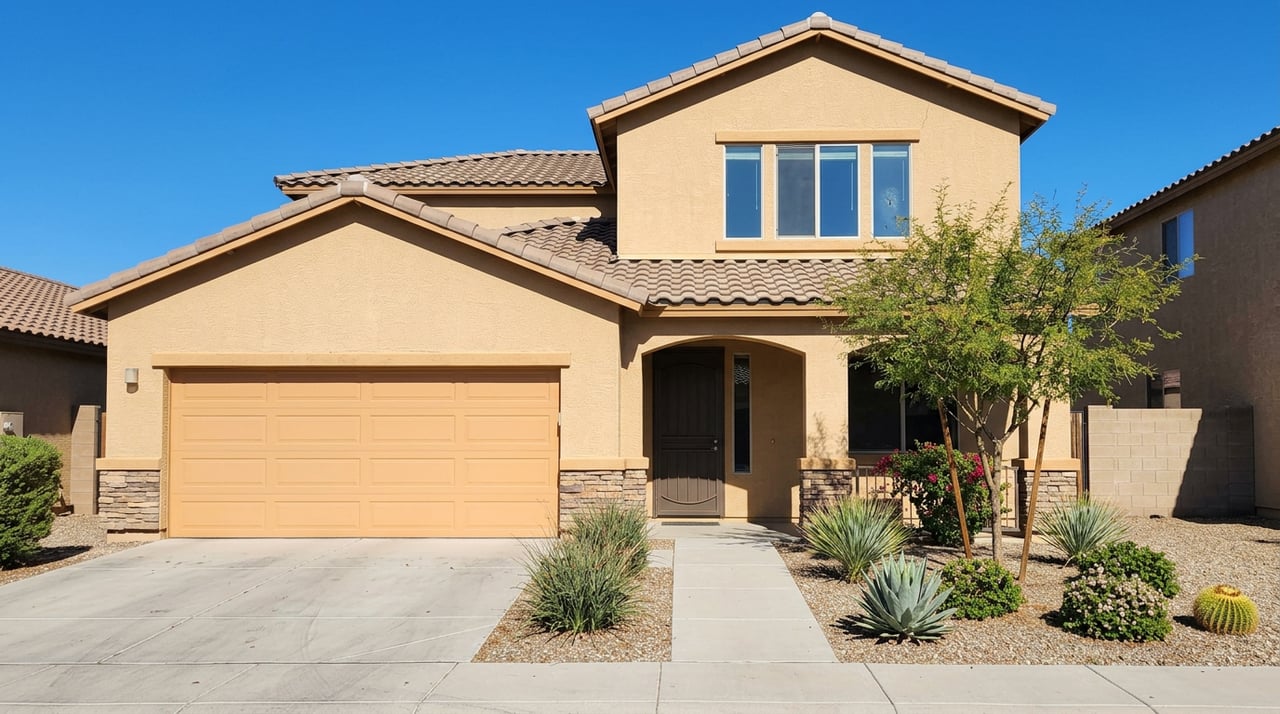
Most investor targets are detached single-family homes built in the last 20 years within HOA-managed subdivisions. You’ll see a wide range of floor plans, typically 2 to 4 bedrooms, and lot sizes that vary by neighborhood. Built-for-rent and professionally managed clusters exist in the West Valley as well.
Recent sale medians by submarket range from the mid-$300ks to the mid-$500ks depending on age, location, and amenity packages. Zillow’s city index placed Buckeye’s median home value near $393,621 as of late January 2026. The mix matters: newer homes and premium HOA amenities often price higher, while older or more basic inventory in outlying pockets can trade closer to entry levels.
Who rents single-family homes here
Buckeye has a higher owner-occupancy share than many Phoenix suburbs, yet there is a consistent renter base for SFRs. Typical tenants include families seeking 2 to 4 bedrooms, logistics and service workers tied to West Valley employment, and commuters to larger Phoenix job centers. Household sizes and enrollment patterns suggest family-oriented demand across many subdivisions.
Risks to underwrite in Buckeye
Water policy and new supply
Arizona’s Assured Water Supply rules led to a 2023 pause on some new subdivision approvals that relied on local groundwater. This affected parts of the West Valley and introduced project-by-project solutions, such as inter-basin transfers and alternative portfolios. The upshot: water remains a live policy factor for timing and the pace of future supply. If your revenue plan depends on rapid new-build absorption nearby, track updates closely and review a property’s water status early (state action overview).
HOA rules and rental limits
Many Buckeye homes sit in HOAs that control exterior standards, parking, and rental policies. Some associations limit short-term rentals, require tenant registration, or set minimum lease terms. Before you write an offer, read the CC&Rs, confirm any rental restrictions, and review reserves and pending assessments. High-amenity communities like Estrella publish helpful guidance in their HOA FAQs.
Arizona landlord-tenant basics
Arizona’s Residential Landlord and Tenant Act outlines repair obligations, notice periods, and eviction timelines. For example, habitability duties are addressed in A.R.S. § 33-1324. Align your lease with statute, and work with local counsel and management to set your notice and enforcement processes from day one. You can read the statute text in the Arizona Revised Statutes.
Desert maintenance and capex
Budget for heat-driven wear. In Buckeye, heavy summer AC use creates higher operating and replacement costs. Full AC replacements commonly run about $4,500 to $9,000+ depending on system size and spec, so model a realistic reserve for HVAC, roofs, pools, and desert landscaping. See cost ranges in Angi’s Phoenix AC guide.
Insurance and property taxes
Arizona homeowners and landlord insurance premiums rose materially in the early 2020s, and volatility may continue. Get property-specific quotes and factor in renewal risk. For context, see Bankrate’s Arizona insurance overview. Maricopa County property tax rates are often lower than many states on an effective basis, but actual bills vary by district and special assessments, so verify each parcel’s current tax bill on the county’s property tax page.
Short-term rentals and permits
Arizona state law allows cities to regulate, but not ban, vacation rentals. You may face permit, notification, insurance, and nuisance-control requirements. HOAs can restrict short-term rentals within their communities. Confirm city rules and CC&Rs if you plan to operate a furnished rental.
Property management and turnover
Full-service SFR management typically runs around 8 to 12 percent of collected rent, plus leasing and renewal fees. Clarify fee schedules and service levels, and underwrite vacancy and leasing costs. A strong local manager can reduce downtime and coordinate maintenance, but treat the fee as a core operating expense in your model.
Run the numbers: a simple example
Let’s use a conservative city-level snapshot to frame expectations.
- Purchase price benchmark: Buckeye median home value around $393,621 (Zillow city index, Jan 31, 2026).
- Representative rent: 3-bedroom average about $2,023 per month per RentCafe’s update. Annual gross rent ≈ $24,276.
From those inputs:
- Gross yield = 24,276 ÷ 393,621 ≈ 6.17%.
- If operating expenses are 50% of gross, NOI ≈ $12,138, so cap rate ≈ 3.08%.
- At 40% expenses, NOI ≈ $14,566, cap rate ≈ 3.70%.
- At 35% expenses, NOI ≈ $15,780, cap rate ≈ 4.01%.
What it means: with mid-$2,000 monthly rents against a roughly $390k purchase, stabilized SFRs in Buckeye often pencil to gross yields near 6 percent and cap rates in the 3 to 4 percent range, depending on HOA dues and operating efficiency. In today’s rate environment, positive cash-on-cash usually requires one or more of the following: a below-market acquisition, higher-than-index rents due to a value-add plan, a larger down payment, or favorable financing.
Where to focus your search
Neighborhood cues to watch
- Proximity to job corridors like I-10 and major logistics parks for commuter convenience.
- Newer homes that reduce near-term capex, especially for HVAC and roofs.
- HOA rules and dues that align with your rental strategy; verify rental policies up front.
- Master-plan buildout pace and water approvals in fringe areas that could affect timing and supply.
Exit strategies
Plan multiple exit paths. Your most likely buyer is an owner-occupant, but small investors and BTR operators also acquire stabilized SFRs. Liquidity depends on broader metro cycles, interest rates, HOA conditions, and the supply pipeline. Keep the home marketable to both owner-occupants and investors to widen your resale options.
Local underwriting checklist
Use this quick process when you underwrite any Buckeye SFR:
- Price and rent: Pull recent comps by ZIP and bed count; cross-check against city-level indices and current listings.
- Taxes and insurance: Verify the parcel’s current bill and request two to three landlord insurance quotes. Use the Maricopa County tax portal for tax details and keep an eye on Arizona insurance cost trends.
- HOA and CC&Rs: Request CC&Rs, rental rules, and recent meeting minutes. Review dues, reserves, and special assessments. Communities like Estrella provide HOA FAQ resources that show the type of information to expect.
- Water diligence: Confirm the property’s water service and whether the surrounding area relies on future approvals. Stay current on policy updates like the 2023 groundwater action (state overview).
- Operations: Build realistic line items for AC replacement, pools, landscaping, and desert wear using regional cost guides like Angi’s Phoenix AC estimates.
- Legal and leasing: Align leases with Arizona’s landlord-tenant law and set notice, collections, and eviction procedures. Start with the statutory framework in A.R.S. Title 33 and confirm details with local counsel.
- Management and turnover: Get written proposals from two local managers. Typical full-service fees often land around 8 to 12 percent; include leasing and renewal fees in your pro forma.
- Sensitivity test: Model three scenarios for price, rent, expenses, and interest rate. Include insurance and tax stress cases.
If you want local eyes on a property or need rent and expense assumptions tuned to a specific Buckeye neighborhood, we’re happy to help. Reach out to The McIvor Team for a straightforward investor consult, on-the-ground comps, and introductions to trusted property managers and lenders.
FAQs
What cap rate can I expect for a Buckeye SFR in 2026?
- Using city-level benchmarks, many stabilized SFRs pencil to roughly 3 to 4 percent cap rates depending on expenses and HOA dues.
How much rent should I underwrite for a 3-bedroom in Buckeye?
- A recent index shows the average 3-bedroom around $2,023 per month, but you should verify by neighborhood comps and current listings.
Do Buckeye HOAs allow rentals?
- Many do allow long-term rentals, but terms vary widely; always review CC&Rs, dues, and any short-term rental restrictions before you buy.
How does Arizona’s water policy affect my investment risk?
- The 2023 pause on certain groundwater-reliant subdivisions added timing risk to some projects; confirm water status for your property and nearby developments.
What are typical property management fees for a Buckeye SFR?
- Full-service fees often run about 8 to 12 percent of collected rent, plus leasing and renewal fees; get written proposals to compare services.